
Mammal species profile
Southern Elephant Seal
Mirounga leonina
- Order
- Carnivora
- Family
- Phocidae
A closer look
Illustrated identification
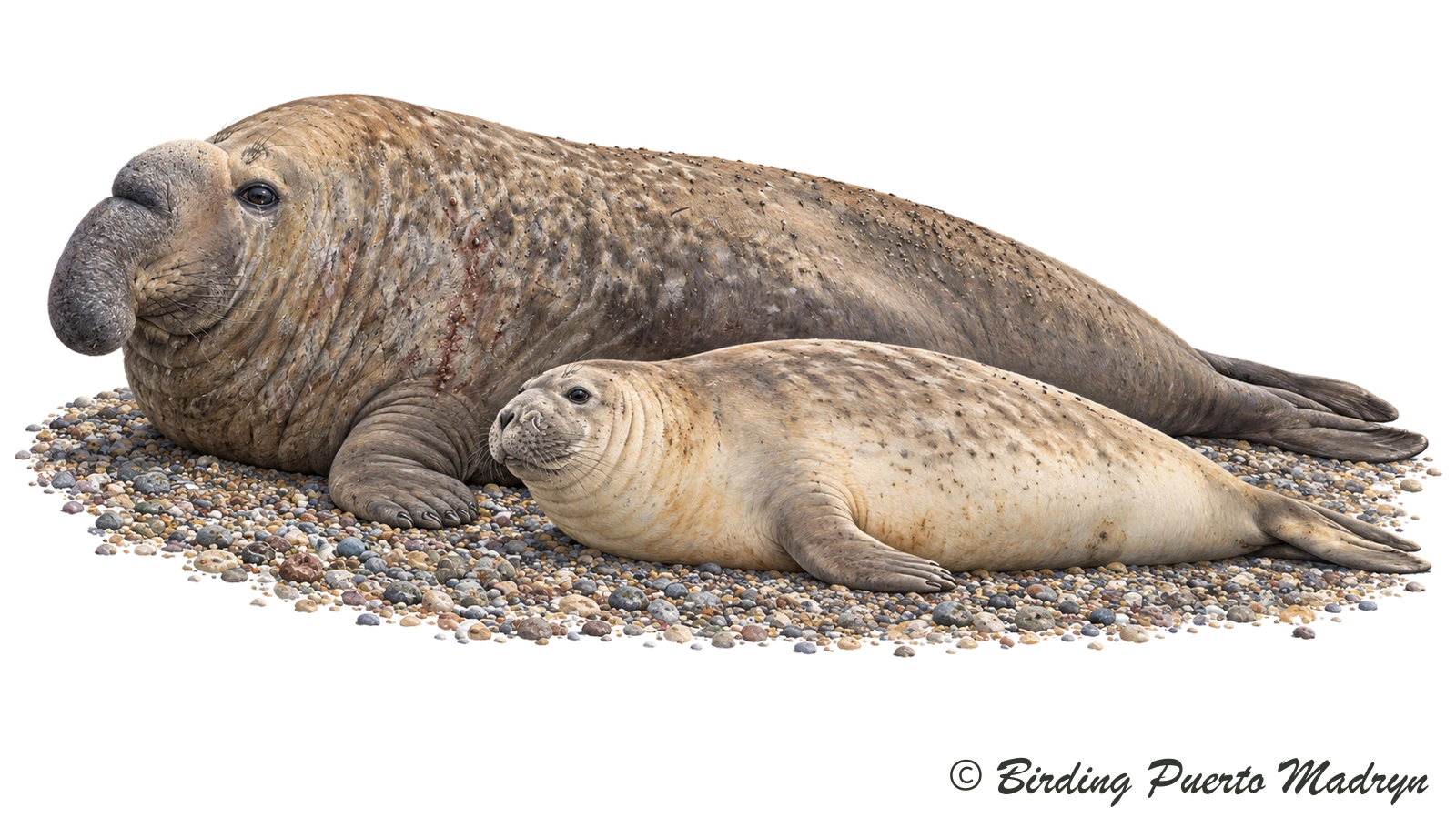 View larger
About the species
The adult male is far larger than the female and develops the swollen nose that gives elephant seals their name. Females have a smoother head profile. Neither sex has external ear flaps, and both move across land by undulating the body rather than walking on four flippers.
Their time on the beach is only part of an ocean-going life. Elephant seals spend long periods foraging at sea and return to shore to breed or shed their old skin and coat. Valdés supports a breeding population, with the principal reproductive activity in spring and moulting extending into summer.
In our region. The main coastal viewing period is September–April. Breeding extends through spring, especially September–October; later beach groups may be moulting. Numbers and age groups vary between sites and months.
Habitat
Coastal beaches used for breeding and moulting; offshore waters used for feeding.
Foraging
Fish and cephalopods captured during deep dives.
Source
Administración Península Valdés: Elefante marino
Society for Marine Mammalogy: Species and subspecies list
Illustrations and design © Birding Puerto Madryn / Tinamou Travel. All rights reserved.