
Bird species profile
Lesser Rhea
Pterocnemia pennata
- Order
- Rheiiformes
- Family
- Rheidae
A closer look
Illustrated identification
 View larger
About the species
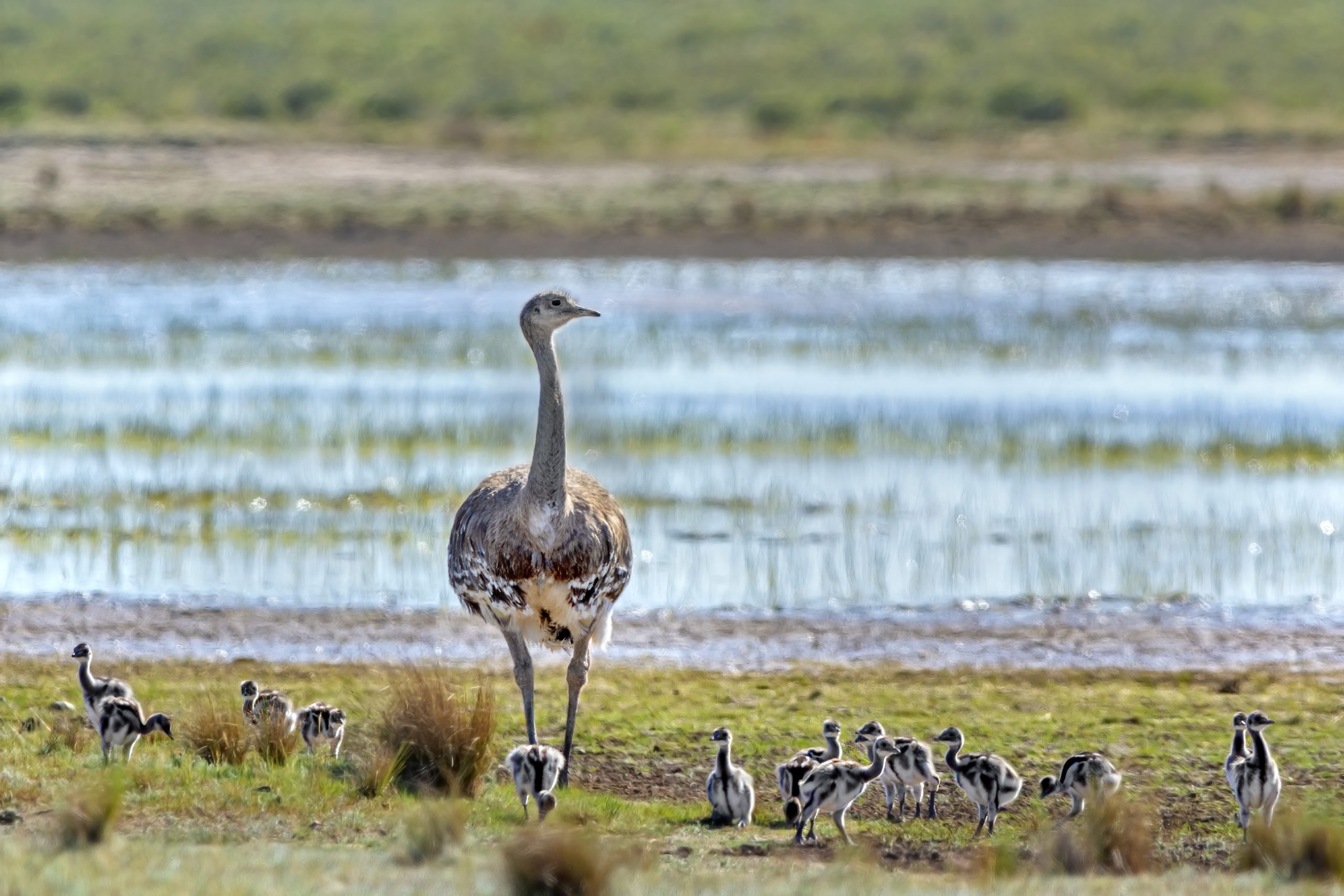
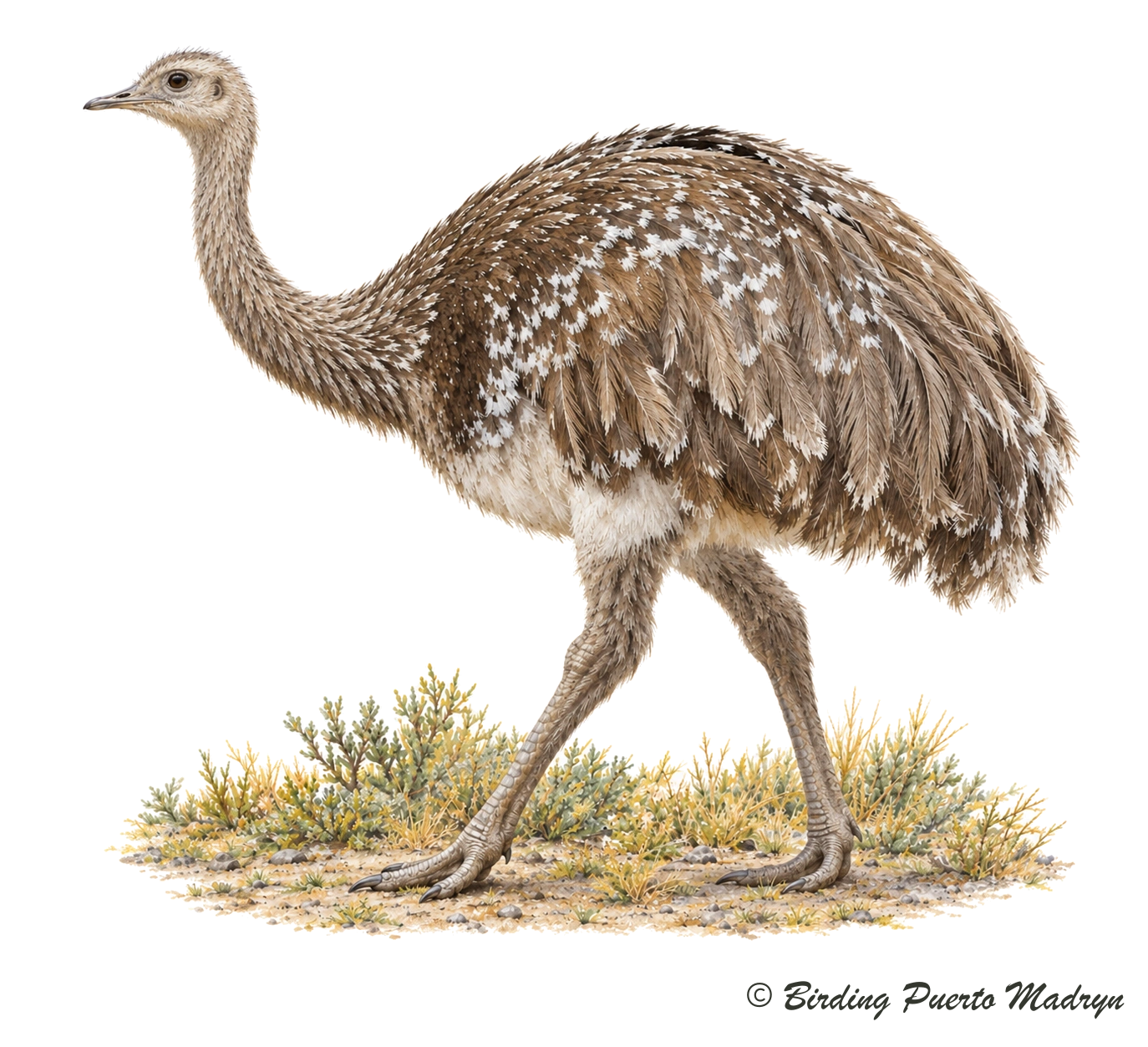
The Lesser Rhea is a large, flightless bird found across the Patagonian steppes and Andean foothills. Standing about 90 to 100 cm tall, it has grey-brown plumage with white flecks, long legs, and a long neck. Social and wary, Lesser Rheas often form groups, especially outside the breeding season. Males build the nest, incubate a communal clutch laid by several females, and care for the chicks. Their powerful legs make them swift runners, helping them evade predators such as pumas and foxes. The species is well adapted to the open, windswept landscapes of Patagonia, where it feeds on plants, seeds, insects and occasionally small vertebrates. The Lesser Rhea is globally classified as Least Concern. In Argentina, the 2017 national assessment classifies it as Vulnerable, and local populations can be affected by hunting, egg collection, livestock grazing and habitat change.
Habitat
Open Patagonian steppes, grasslands, shrublands, and foothills of the Andes, often in arid or semi-arid regions.
Foraging
Feeds by walking and grazing on grasses, seeds, leaves, and occasionally insects and small vertebrates.
Source
Illustrations and design © Birding Puerto Madryn / Tinamou Travel. All rights reserved.