
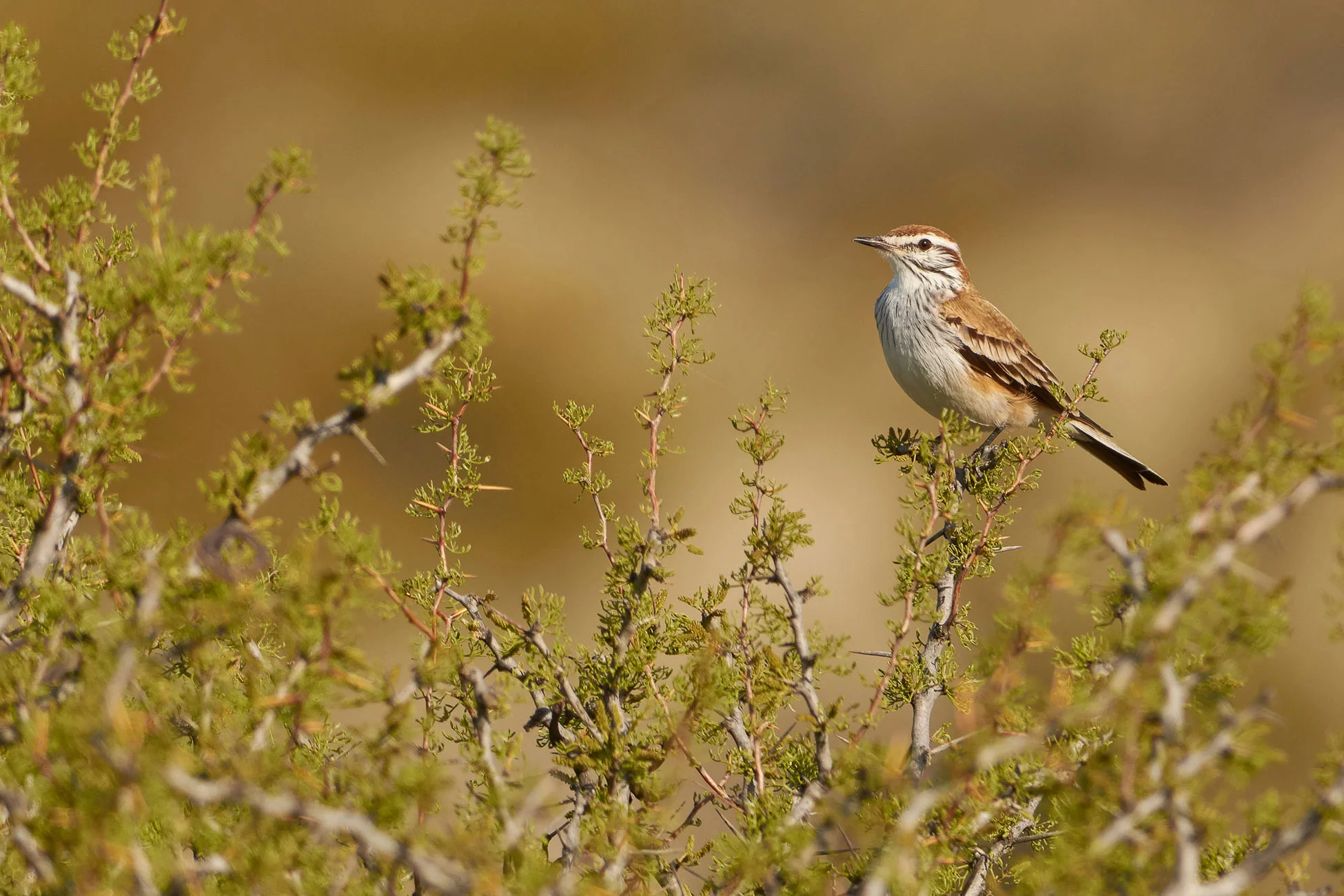

Mammal species profile
Molina’s Hog-nosed Skunk
Conepatus chinga
- Order
- Carnivora
- Family
- Mephitidae
A closer look
Illustrated identification
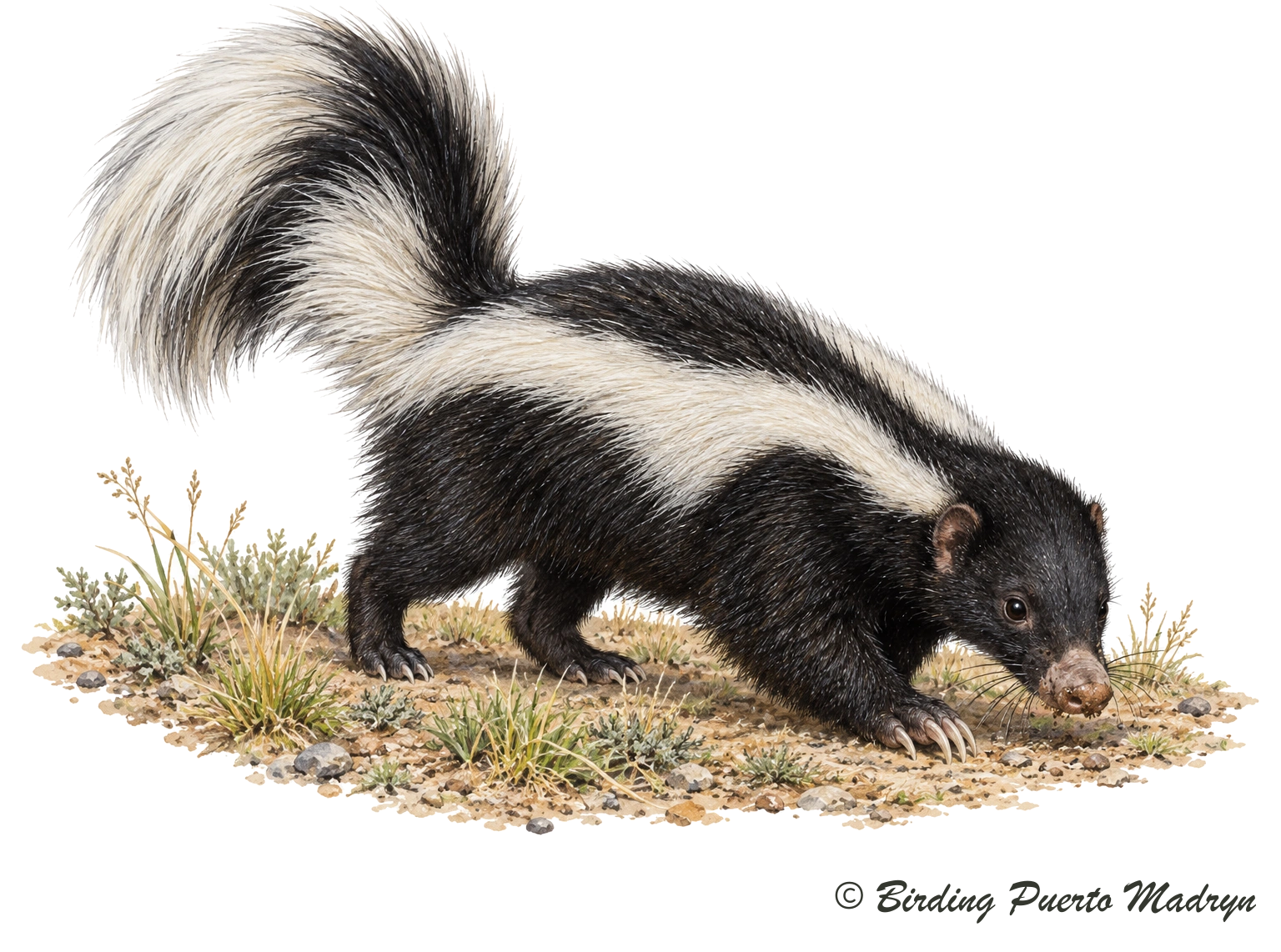 View larger
About the species
A dark body, bushy tail and two pale stripes make this skunk distinctive, but the width and length of the white markings vary considerably. Its small ears and prominent nose suit a life close to the ground. Strong foreclaws are used to open the soil when searching for food.
The hog-nosed skunk forages mainly around dusk and at night, sometimes emerging during daylight. Insects and their larvae are important foods, alongside other animal and plant material. It usually travels alone, leaving small excavations where it has investigated the ground.
In our region. Present in the region throughout the year, but easily missed on daytime outings. A brief chance encounter is more realistic than a scheduled sighting.
Habitat
Open steppe, scrub and stony or sandy ground.
Foraging
Insects and larvae, other small animals, plant material and carrion.
Source
Administración de Parques Nacionales — Conepatus chinga
Mammal Diversity Database — Conepatus chinga
Illustrations and design © Birding Puerto Madryn / Tinamou Travel. All rights reserved.

